

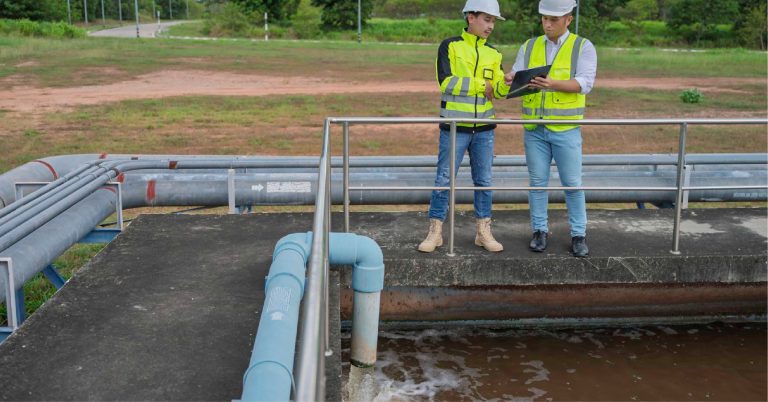
With growing urbanization and population expansion, Nepal is witnessing an increasing demand for efficient Sewage Treatment Plants to manage domestic wastewater and protect water resources. Proper wastewater treatment is essential for maintaining public health, preventing environmental pollution, and ensuring sustainable urban development.
As cities and towns expand, the need for reliable Sewage Treatment Plant Manufacturer partners becomes critical. Advanced treatment technologies and well-designed systems help municipalities and industries manage sewage effectively while complying with environmental regulations.
Importance of Sewage Treatment in Nepal
Untreated sewage can contaminate rivers, groundwater, and soil, leading to serious environmental and health issues. Implementing modern Sewage Treatment Plants helps:
- Prevent water pollution
- Protect public health
- Improve sanitation standards
- Enable water reuse
- Support sustainable urban growth
Effective wastewater treatment systems are therefore essential for both urban and rural infrastructure development.
What Is a Sewage Treatment Plant?
A Sewage Treatment Plant (STP) is a facility designed to treat domestic and municipal wastewater by removing contaminants such as organic matter, suspended solids, nutrients, and pathogens.
A properly designed STP ensures that treated water meets discharge standards or can be safely reused for non-potable applications.
Sewage Treatment Process
The Sewage Treatment Process typically involves multiple stages to ensure effective removal of contaminants.
-
Preliminary Treatment
This stage removes large solids and debris from incoming sewage using screening and grit removal systems.
It protects downstream equipment from damage.
-
Primary Treatment
Primary treatment involves sedimentation, where suspended solids settle at the bottom of tanks and are removed as sludge.
This reduces the overall load on biological treatment processes.
-
Biological Treatment
Biological processes use microorganisms to break down organic pollutants present in wastewater.
Common systems include:
- Activated sludge process
- Sequencing batch reactors (SBR)
- Moving bed biofilm reactors (MBBR)
- Membrane bioreactors (MBR)
This stage significantly reduces BOD and COD levels.
-
Secondary Clarification
After biological treatment, solids are separated from treated water through clarification.
The clarified water moves to further treatment stages.
-
Tertiary Treatment and Disinfection
Advanced treatment processes ensure final polishing of water quality.
These may include:
- Filtration systems
- Disinfection using UV or chlorination
- Advanced membrane filtration
This stage ensures that treated water is safe for discharge or reuse.
Types of Sewage Treatment Plants
Different types of Sewage Treatment Plants are used depending on application and capacity:
- Conventional activated sludge plants
- Compact STPs for residential complexes
- SBR and MBBR-based systems
- Membrane-based STPs (MBR)
- Decentralized wastewater treatment systems
Selecting the right system depends on wastewater characteristics, available space, and treatment requirements.
Role of a Sewage Treatment Plant Manufacturer
A reliable Sewage Treatment Plant Manufacturer plays a key role in designing, installing, and maintaining treatment systems.
Key responsibilities include:
- Custom system design based on site conditions
- Selection of appropriate treatment technologies
- Installation and commissioning
- Operation and maintenance support
- Ensuring compliance with environmental standards
Choosing an experienced manufacturer ensures efficient and long-lasting wastewater treatment solutions.
Benefits of Modern Sewage Treatment Plants
Implementing advanced wastewater treatment systems offers several benefits:
- Reduced environmental pollution
- Improved water quality
- Compliance with regulatory norms
- Reduced freshwater consumption through reuse
- Improved sanitation and hygiene
- Sustainable water management
These benefits make STPs essential for modern infrastructure.
Ion Exchange – Sewage Treatment Solutions Provider
Ion Exchange is a leading provider of innovative water and wastewater treatment solutions. Their advanced range of sewage treatment plants is designed to meet the diverse needs of the country’s growing population and industrial sectors. With a focus on sustainability and efficiency, Ion Exchange offers customized solutions that incorporate the latest technologies, ensuring optimal performance and environmental compliance.
INDION New Generation Packaged Sewage Treatment Plant (NGPSTP)
It is a state-of-the-art solution that combines the innovative technologies of lamella plate clarification and aeration, resulting in a highly efficient, ready-to-operate, prefabricated system for sewage treatment. This all-in-one single-tank packaged system is designed with a modular capacity ranging from 10 to 100 m3/d, making it both compact and user-friendly. Not only does it deliver high-quality effluent, but it also boasts features that cater to the specific needs of modern facilities. The NGPSTP’s advantages include minimal land usage, reduced power and chemical requirements, and low operating costs, making it an ideal choice for a wide range of applications while ensuring environmental sustainability and cost-effectiveness.
INDION NGPSTP-NR
It is an advanced sewage treatment solution that combines a fixed film reactor with lamella clarification, resulting in a high-performance, prefabricated system that is ready to operate. This all-in-one, modular design offers compact and simple operation with minimal maintenance. Built with an MS tank lined with FRP, it ensures no corrosion, delivering high-quality effluent while being efficient and easy to manage.
Sequencing Batch Reactor (SBR)
It is an advanced activated sludge process that operates in true batch mode, with both aeration and sludge settlement occurring within the same tank. Unlike conventional continuous-flow systems, which separate these functions into different spaces, the SBR performs them in a time sequence, offering greater flexibility. This design allows the SBR to handle varying influent volumes, making it adaptable to changing conditions, unlike the continuous system, which relies on a fixed flow rate.
Advanced Fluidized Media Reactor (AFMR) system
It is a compact SINGLE TANK DESIGN UNIT that integrates an aeration tank with floating media, a lamella settler, and a chlorine contact tank. The AFMR media boasts a high surface area, excellent physical and chemical resistance, and minimal annual losses. INDION’s Advanced FMR offers significant advantages, including reduced space requirements, lower power consumption due to the elimination of sludge recirculation, and minimal maintenance thanks to its design without moving mechanical parts.
Supporting Sustainable Development in Nepal
As Nepal continues to urbanize, the demand for efficient Sewage Treatment Plants will continue to grow. Investing in modern treatment infrastructure will help:
- Improve sanitation
- Protect water resources
- Support sustainable development
- Enable water reuse
- Enhance quality of life
Strong wastewater management systems are essential for building resilient and sustainable cities.
Conclusion
The need for reliable Sewage Treatment Plant Manufacturer partners and advanced wastewater treatment solutions in Nepal is increasing with urban growth and environmental challenges. By implementing efficient Sewage Treatment Process technologies and modern treatment systems, municipalities and industries can ensure safe wastewater management and sustainable development.
With integrated solutions and advanced technologies, companies like Ion Exchange are helping Nepal move toward a cleaner and more sustainable water future.
FAQs
- What is a sewage treatment plant used for?
A sewage treatment plant treats domestic wastewater by removing contaminants to make water safe for discharge or reuse. - What are the stages of the sewage treatment process?
The process includes preliminary, primary, biological, secondary, and tertiary treatment stages to remove solids, organic matter, and pathogens. - Why is wastewater treatment important in Nepal?
Wastewater treatment prevents pollution, improves sanitation, and protects water resources in growing urban areas. - What types of sewage treatment plants are commonly used?
Common types include activated sludge, SBR, MBBR, MBR, and compact modular STPs. - How does Ion Exchange provide sewage treatment solutions?
Ion Exchange designs and delivers advanced STPs, biological systems, and recycling solutions for efficient wastewater treatment and reuse.