

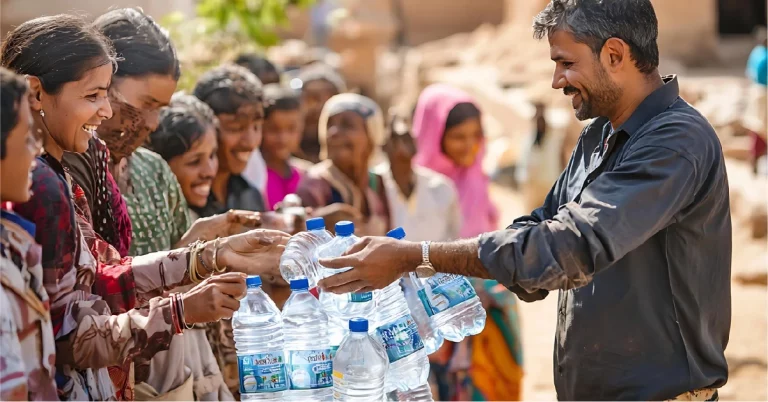
Access to Safe Drinking Water remains a fundamental requirement for public health, economic development, and community well-being. In Nepal, many rural and mountainous regions continue to face challenges in securing reliable Water Supply systems due to geographical constraints, limited infrastructure, and growing population demands. Expanding sustainable water access has therefore become a national priority to ensure that every community receives clean and safe water for daily use.
Reliable drinking water treatment systems play a crucial role in maintaining water quality and protecting communities from waterborne diseases. By implementing modern drinking water treatment technologies and strengthening Water Supply infrastructure, Nepal can improve access to Safe Drinking Water and support long-term sustainable development.
Challenges in Providing Safe Drinking Water in Nepal
Nepal’s diverse geography presents unique challenges for developing efficient Water Supply networks. Remote villages often depend on natural water sources such as springs, rivers, and groundwater, which may be vulnerable to contamination from agricultural runoff, sanitation issues, and natural pollutants.
Some key challenges affecting sustainable water access in Nepal include:
- Limited infrastructure for drinking water treatment in rural areas
- Seasonal variations affecting water availability
- Contamination from bacteria, sediments, and dissolved impurities
- Increasing demand for reliable Water Supply systems
Ensuring consistent water quality requires advanced drinking water treatment solutions capable of removing contaminants and delivering Safe Drinking Water to communities.
Importance of Drinking Water Treatment Systems
Effective drinking water treatment is essential to ensure that water from natural sources meets safe consumption standards. Modern drinking water treatment systems are designed to remove harmful microorganisms, suspended solids, and dissolved impurities that may compromise water quality.
Typical drinking water treatment processes include:
- Pre-treatment through screening and sedimentation
- Filtration systems to remove suspended particles
- Disinfection processes to eliminate pathogens
- Advanced purification technologies for improving water quality
By combining these processes, communities can achieve sustainable water access while maintaining reliable Water Supply systems.
Strengthening Water Supply Infrastructure
Developing robust Water Supply infrastructure is a key step in ensuring Safe Drinking Water for all communities. Modern water supply projects focus on improving water collection, treatment, storage, and distribution systems.
Key components of an efficient Water Supply network include:
- Source water collection and protection
- Water treatment facilities to ensure water quality
- Storage reservoirs and pumping stations
- Distribution pipelines delivering Safe Drinking Water to households
Strengthening these systems helps ensure consistent water availability and improves sustainable water access across urban and rural regions.
Role of Technology in Improving Water Quality
Advances in drinking water treatment technologies are transforming how communities access clean water. Technologies such as membrane filtration, advanced filtration systems, and automated monitoring solutions help improve water quality while enhancing operational efficiency.
These modern systems allow water treatment facilities to operate reliably even in challenging environments, ensuring communities receive Safe Drinking Water consistently.
Ion Exchange Solutions for Sustainable Water Access
Ion Exchange (India) Ltd. has decades of experience in delivering integrated Water Supply and drinking water treatment solutions across the world. Through advanced water treatment technologies, customized water management systems, and turnkey project execution, Ion Exchange helps communities improve water quality and expand sustainable water access.
Safe Drinking Water For Every Community
Access to safe drinking water remains a critical challenge for a vast population in India. While urban areas have made significant progress, many rural communities still face persistent water shortages, resulting in severe water crises and problems related to sanitation and health. The consequences of poor water quality are immense, significantly contributing to the spread of diseases. In line with this, Ion Exchange has developed innovative technologies and solutions tailored to the needs of rural communities, ensuring ease of use, affordability, and adaptability for sustainable water access.
Ion Exchange provided a 10 MLD Chlorine Dioxide (ClO2 ) Generator for Dissolved algae Removal to the Karnataka Water Supply and Drainage Board, Hosapete, Karnataka. ClO22 is a powerful oxidizing agent that effectively eliminates dissolved algae, biofilm, and microbial contaminants. Approved for drinking water treatment, it boasts a long shelf life and serves as a highly efficient bio-dispersant and microbial control agent, ensuring safe and clean water. Additionally, its low corrosiveness helps protect pipelines and equipment, reducing maintenance costs and enhancing system longevity.
Towards Universal Access to Safe Drinking Water
Ensuring Safe Drinking Water for every community is essential for improving public health and supporting social development. As Nepal continues to strengthen its water infrastructure, investments in sustainable water access, modern Water Supply systems, and advanced drinking water treatment technologies will play a critical role in meeting growing demand.
By adopting integrated water management solutions and prioritizing water quality, Nepal can move closer to achieving universal access to Safe Drinking Water for all communities.
Connect with Ion Exchange experts to explore advanced drinking water treatment and Water Supply solutions that support sustainable water access and improved water quality.
FAQ:
1. Why is safe drinking water access difficult in remote regions?
Remote regions face challenges due to difficult terrain, limited infrastructure, seasonal water availability, and a lack of proper drinking water treatment and distribution systems.
2. What contaminants are removed during drinking water treatment?
Drinking water treatment removes bacteria, viruses, suspended solids, dissolved impurities, and harmful chemicals to ensure safe drinking water and proper water quality.
3. How can modern technology improve water supply systems?
Modern water treatment technologies, such as membrane filtration, automated monitoring, and advanced purification systems, improve water quality and ensure a reliable water supply.
4. What are the key components of a reliable water supply network?
A reliable water supply system includes source protection, water treatment facilities, storage reservoirs, pumping stations, and distribution pipelines to deliver safe drinking water.
5. How does Ion Exchange help communities implement safe drinking water solutions?
Ion Exchange provides integrated water supply and drinking water treatment solutions using advanced technologies, turnkey project execution, and customized systems to ensure sustainable water access.